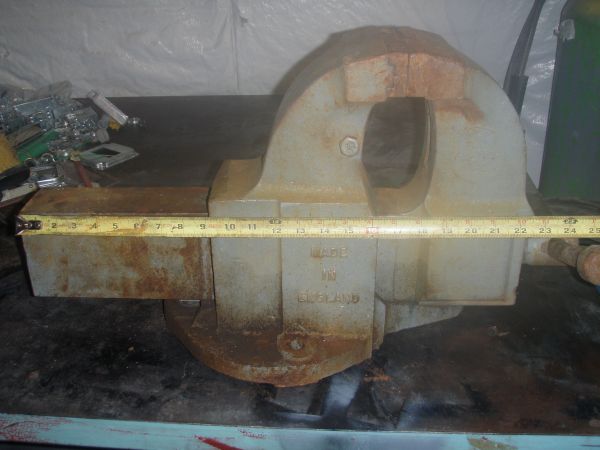
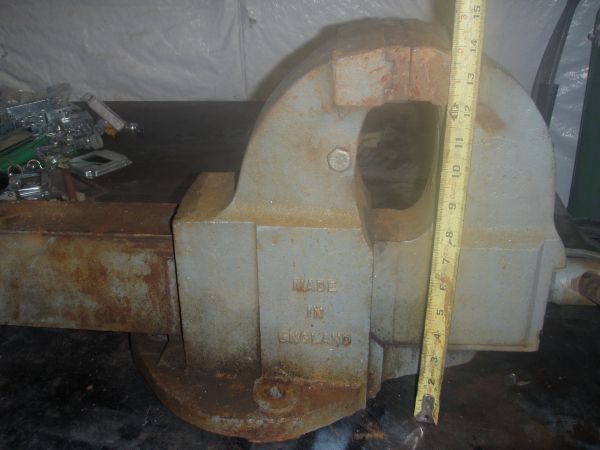
Who doesn't like bench vises? I've had several. But the one I use today is one I found on Craigslist in 2012. I know there are bigger and stronger vises available today but I paid $150 for it and love it dearly. I thought I'd tell its story.
The seller told me it came out of a logging camp in Canada and that he had hauled it home (near Seattle) and had owned it for quite awhile. It was not in working condition when I got it. Above are the two crappy photos that were in the forsale posting. The vise handle was obviously a shop-made replacement for the original, and when I tried to open the vise nothing happened. Still, we got the thing apart into its two main subassemblies and in that form I was able to load the thing into my car. Its weight fully assembled is 170 pounds according to the Record catalog. It is a Record model 634 combination vise, although mine was (and is) missing the pipe jaws.
The jaws are 6" wide and the top of the jaws is 14" above the base. The moving jaw is 25-1/2" long including the handle head. The jaws open 12" and there is 5-1/2" of throat clearance between the bottom of the jaw and the top of the shank of the movable jaw. It was made in England. The jaws were pretty well worn, but once I fixed the nut there isn't an unreasonable amount of backlash.
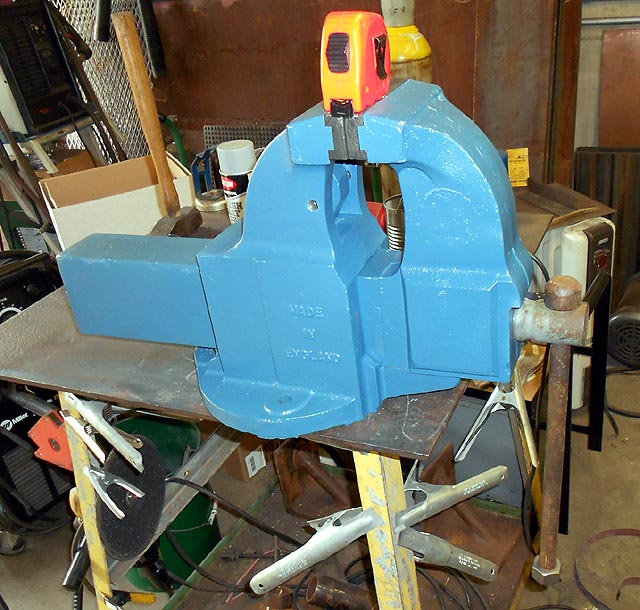
I submerged the vise body in a large stock pot full of water along with about a cup of Cascade dishwashing detergent and brought the pot to a boil, then shut it off and left it to soak overnight. The next day it pressure washed clean easily. I knocked the rust off with a cup wire wheel on an angle grinder. I did the same process with the movable jaw, and then the vise was ready for paint. Here is the vise temporarily reassembled after painting:
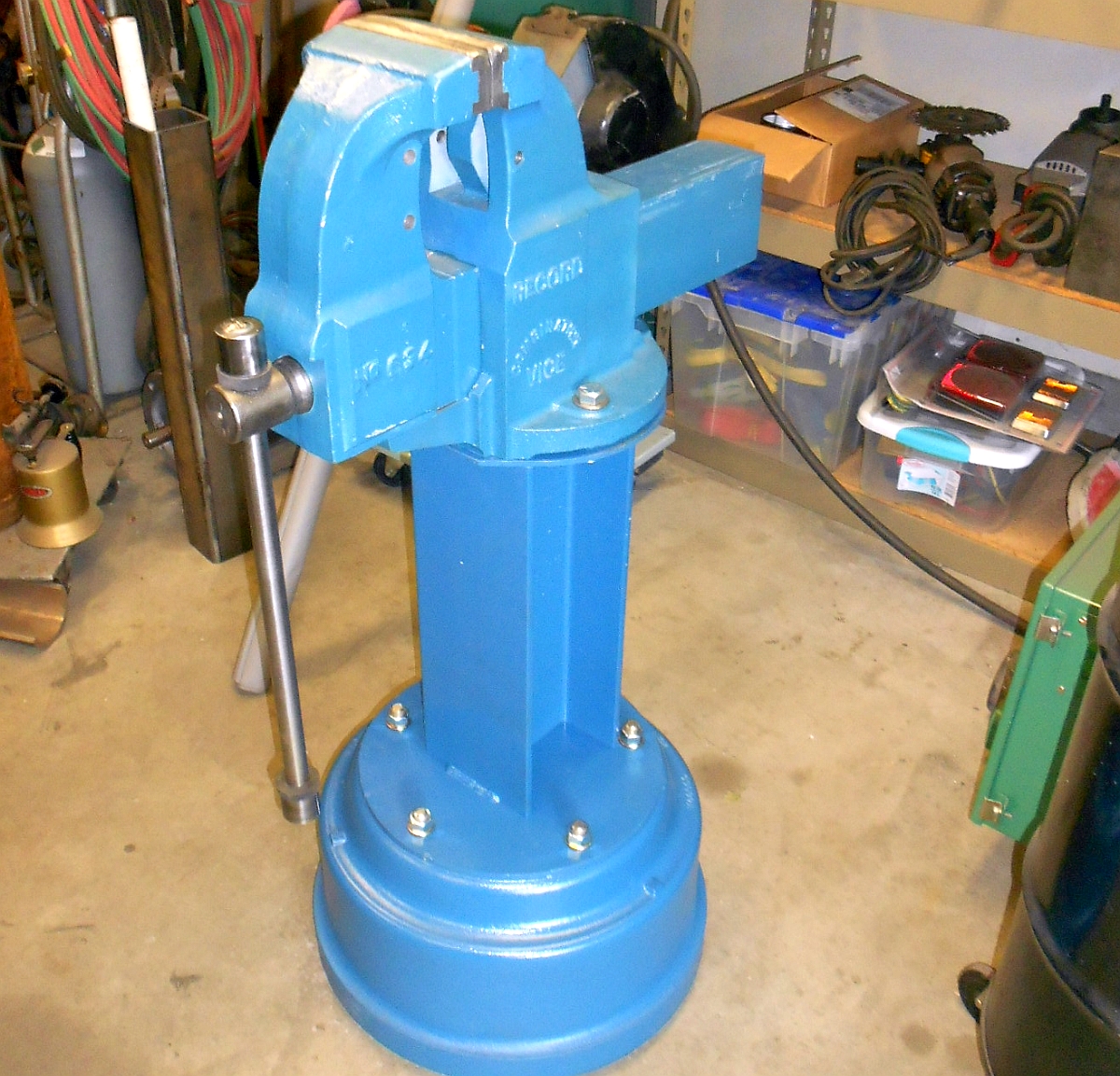
I have always liked the idea of a freestanding bench vise as opposed to bolting the thing to a bench or welding table. They always seem to be in the way when attached to a table. Anyway, I got hold of a brake drum from a beer truck and cleaned it up and made a base out of it. Here is a shot of the vise temporarily sitting on the new base:
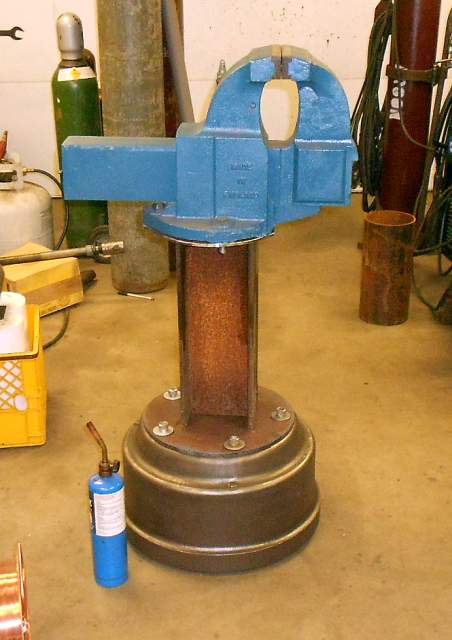
As it was, the vise was terribly top-heavy sitting on the pedestal base I'd made. So I first bolted some steel reinforcement straps into the base and then filled the base with concrete. (It took exactly one bag of Quikrete.)
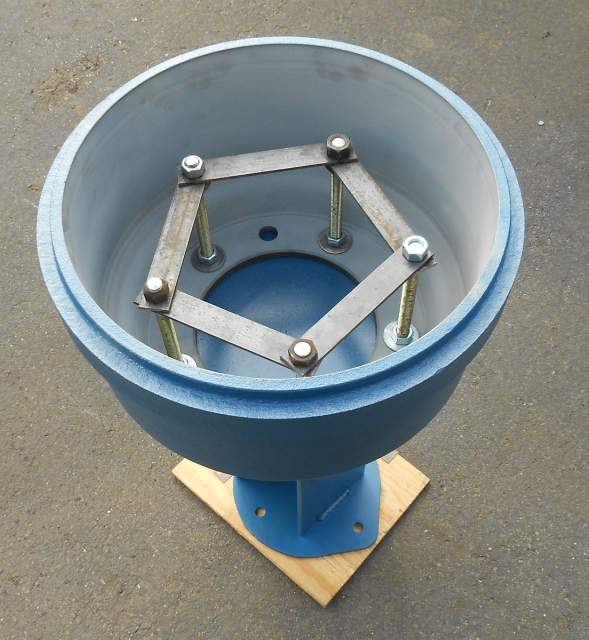
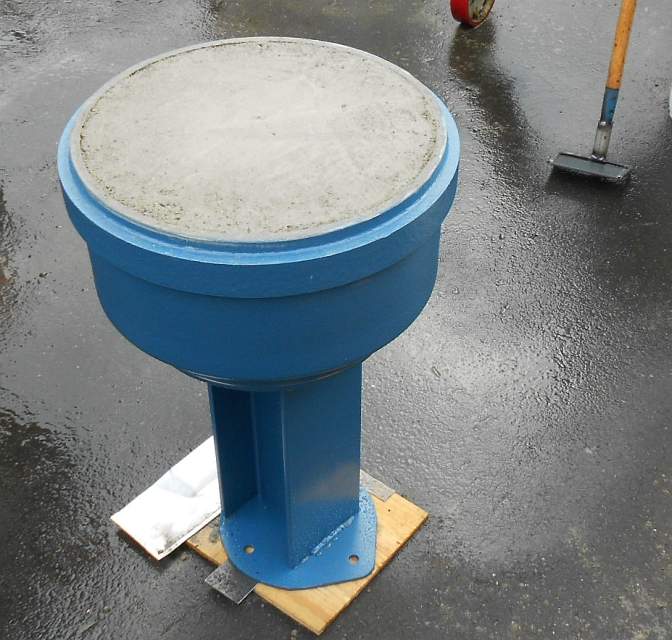
With the brake drum full of concrete the vise was no long top-heavy. I have used it 14 years as I write this, and it has never fallen over. I am a big fan of cleaning up scrap brake drums to use in making floor stands.
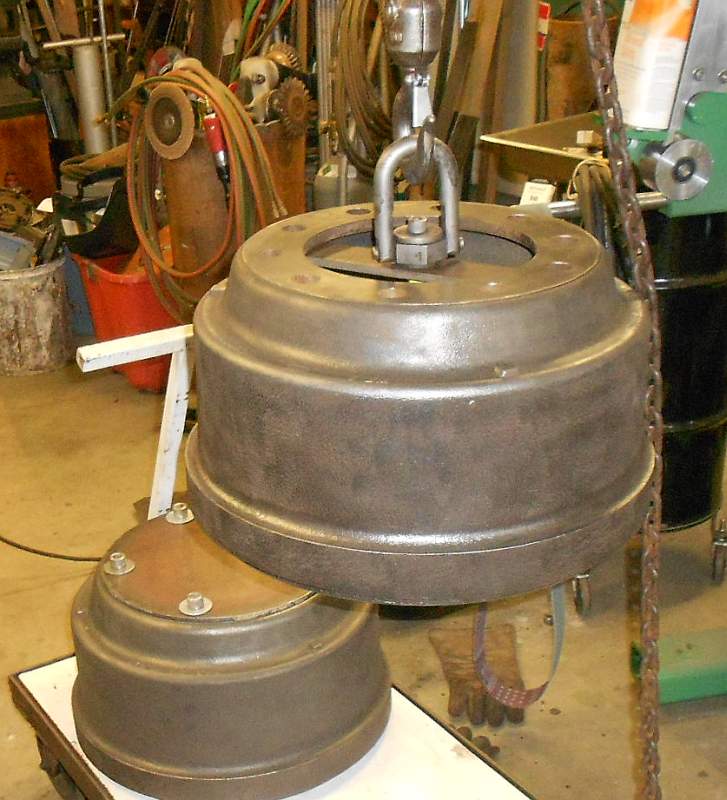
I made a new handle and cut some rubber washers about 3/8" thick to go under the handle ends. I like those because if you do drop the handle and it pinches your hand it does much less damage with the rubber in place. In this picture it had the original jaws just turned upside down so they looked much less battered. Later I made new non-serrated jaws. If you ever make new jaws for an old vise, be sure to measure each jaw separately. Those vises were not made on CNC machines, and often the bolt locations differ slightly one jaw to the other.
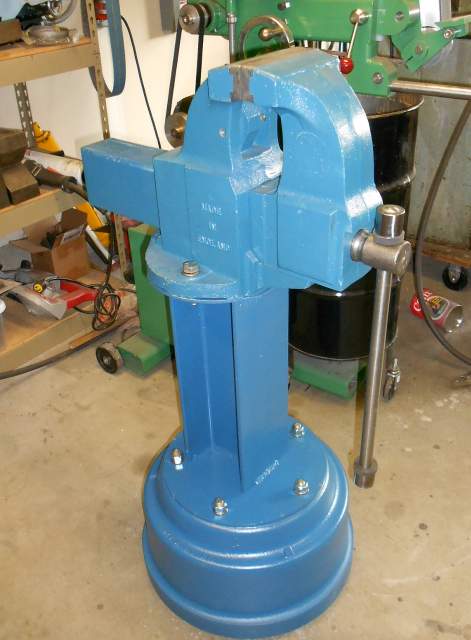
I wrote this little project blog page in 2026 after I'd owned the Record vise for about 14 years. I really like this vise. A local blacksmith visited my shop a few years ago and told me that vises this big are worth a lot of money. I find that gratifying but I do not intend to sell it until I let go of my shop entirely. If you have any idea where I could get replacement pipe jaws please do contact me.
Thanks for reading!